ALTERNATIVE CHANCE/CHANS ALTENATIV
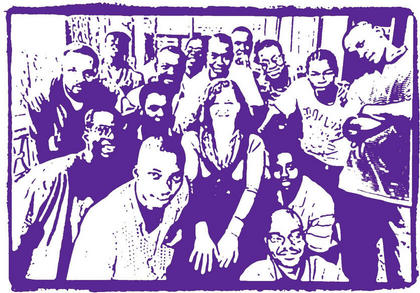

A self-help, peer counseling and advocacy program for Haitian criminal deportees
Haiti-based, Alternative Chance is a self-help, peer counseling program founded in 1996 that provides limited services and advocacy to Haitians who were in conflict with the law abroad and served their time prior to deportation to Haiti.
We continue to be a resource and support for Criminal Deportees in Haiti, & those facing criminal deportation, their families, legal services, law clinics, immigration attorneys, human rights & immigration rights organizations, policy groups, universities, media, Haitian & international agencies, not for profits and community groups, as well as to brief governments on the reality on the ground in Haiti for criminal deportees.
Alternative Chance has fought for years for the Haitian government to stop its illegal and life-threatening detention of criminal deportees arriving in Haiti. In 2022 the Haitian government illegally imprisoned arriving criminal deportees each month for many months as part of an alleged scheme to extract large sums of money from their families. Mobilization in Haiti and the U.S. together with lots of articles in the press, and finally the death of one of the illegally detained who contracted cholera and was refused care. While the deported men were detained in police station holding cells and at the National Penitentiary, the conditions were dire and life threatening and they did not receive their medications sent by ICE at the time they were deported to Haiti. See below about the Haitian government using illegal detention of arriving criminal deportees again.
UPDATE: REGARDING HAITI'S GOVERNMENT AND ILLEGAL DETENTION OF CRIMINAL DEPORTEES UPON ARRIVAL IN HAITI.
On October 26, 2023 approximately thirteen criminal deportees were deported to Haiti. According to Haiti's Office of Citizen Protection, they were notified in advance by the Haitian government that they intended to transfer all the arriving criminal deportees that day to the notorious National Penitentiary. Apparently, at the last minute the Government of Haiti changed course and released the thirteen criminal deportees.
However, in December 2023 they did illegally detain arriving criminal deportees for two days at the DCPJ Judicial Police building.
See Institute for Justice and Democracy in Haiti Human Rights and the Rule of Law in Haiti: Key Recent Developments June through November 2023, Released December 11, 2023
https://ijdh.org/wp-content/uploads/2023/12/IJDH-HRU-Dec.-2023-12.11-FINAL.pdf
VI. Emigration pressures, page 11
- Haitian migrants who are returned to Haiti are particularly vulnerable to recruitment by armed groups439 and sexual exploitation and abuse.440 Assistance to returnees, provided primarily by IOM, remains grossly inadequate.441 Returnees with prior criminal records continue to be distinctly at risk: a group of 17 returnees who served time for criminal convictions in the United States were immediately detained upon their arrival in Haiti on November 30 and kept for two days without access to food, water, medical care, or sleeping mats before being released.442
Footnote 442 on page 58
442 According to information shared by Executive Director of Alternative Chance, Michelle Karshan, one of the individuals returned to Haiti as part of this deportation was Guy Philippe, who was sentenced to prison for money laundering by a U.S. federal judge in 2017 and also has “an outstanding warrant [in Haiti] stemming from a 2016 fatal attack on a police station in the southern coastal city of Les Cayes.” No such warrants have been made public for the other 16 deportees, making their detention alongside Philippe unlawful. All 17 deportees were released without any public explanation regarding further envisioned proceedings for Philippe, who has previously benefited from institutional impunity borne of political connections. See also Evens Sanon, Authorities in Haiti hold former rebel leader Guy Philippe after the US repatriated him, AP NEWS (Dec. 1, 2023), https://apnews.com/article/haiti-guy-philippe-us-eb4a97bd77b45c4f63be542a8345ac06.
REPORT: URGENT CALL TO STOP ALL U.S. DEPORTATIONS TO HAITI, FEBRUARY 2023, by Miami University School of Law, Alternative Chance, Robert F. Kennedy Human Rights, Haitian Bridge Alliance. Includes statements by men who were criminal deportees who when arriving in Haiti were immediately illegally detained for many months in Haiti’s National Penitentiary. Hearings were subsequently held before the Inter-American Commission on Human Rights of the OAS.
REPORT: URGENT CALL TO STOP ALL U.S. DEPORTATIONS TO HAITI, FEBRUARY 2023
July 30, 2021 Justice Sector Challenges in Haiti
IJDH wrote, “The UPR report for justice sector challenges was submitted by the Bureau des Avocats Internationaux (BAI), the Institute for Justice and Democracy in Haiti (IJDH), Chans Altenativ, and the Reseau National de Défense des Droits Humains (RNDDH), and endorsed by Project Blueprint. The report focuses on the ongoing challenges in the justice sector such as chronic impunity and the lack of an independent justice sector; lack of fair independent and effective trials; and escalating pretrial detention and poor prison conditions. Since the last UPR review in 2016, Haiti has regressed in regards to their human rights obligations to the justice sector.”
Alternative Chance contributed section C on Escalating Pretrial Detention and Poor Prison Conditions to a report to the United Nations for their upcoming Universal Periodic Review of human rights issues in Haiti. Despite the report having strict limits on its number of words, we were able to highlight some of the key detention issues in Haiti as well the withholding of medications from criminal deportees when they were detained in quarantine upon arrival. We also advocated for the rights of criminal deportees to have access to their own medical files that are transferred by ICE for their use. We made some recommendations for improvement in the section at the end. In the footnotes #191 through #215, we elaborated on some of the issues.
https://ijdh.org/wp-content/uploads/2021/07/Justice-Sector-Challenges-in-Haiti_UPR-Submission_EN.pdf
In 2015 Alternative Chance Conducted Wrongful Deportation Screenings in Haiti for Boston College Law School’s Post Deportation Human Rights Project
Michelle Karshan, the Executive Director of Alternative Chance/Chans Altenativ, sits on the Advisory Board of the Boston College Law School Post-Deportation Human Rights Project (PDHRP). Karshan has been advocating for post-deportation relief for 19 years. PDHRP is the pioneering program challenging wrongful deportations after someone is deported asked Alternative Chance to conduct screenings for wrongful criminal deportation to Haiti. From February 2015 through end of July 2015, Alternative Chance conducted free screenings. Once the screening was complete, we forwarded it to the Boston College Law School PDHRP for review. Many thanks to Haiti’s Office of Citizen Protection for providing space at their office for this effort.
Alternative Chance collaborates on major report on conditions of Criminal Deportees in Haiti
Alternative Chance, a co-collaborator on the report, AFTERSHOCKS: The Human Impact of U.S. Deportations to Post-Earthquake Haiti (Feb 2015), by University of Miami School of Law Immigration and Human Rights Clinics, and the University of Chicago Law School International Human Rights Clinic, with co-collaborators Alternative Chance, Americans for Immigrant Justice, Haitian Women of Miami (FANM) and the Institute for Justice & Democracy in Haiti (IJDH).
See press release with quote from Alternative Chance’s Executive Director, Michelle Karshan
Continue to Scroll Down for more information
Look for us on FACEBOOK for frequent updates and legal issues
A Guide to Returning to the United States After Deportation: A Guide to Assess Your Eligibility (2014)
Haiti: IACHR - Haitian Removals SYNOPSIS and attachments
The Precautionary Measures Petition filed at the IACHR of the OAS
Deportation 101: A Community Resource on Anti-Deportation Education and Organizing
The IACHR decision
Continue to suspend deportation to Haiti, by Michelle Karshan, Sun-Sentinel, January 19, 2011
Alternative Chance, together with Five other Civil and Human Rights Groups, File Emergency Human Rights Petition To Stop Imminent Deportations To Haiti: Earthquake, Cholera And Violence Is Death Sentence
http://www.ijdh.org/wp-content/uploads/2021/07/Justice-Sector-Challenges-in-Haiti_UPR-Submission_FR.pdf
|
